
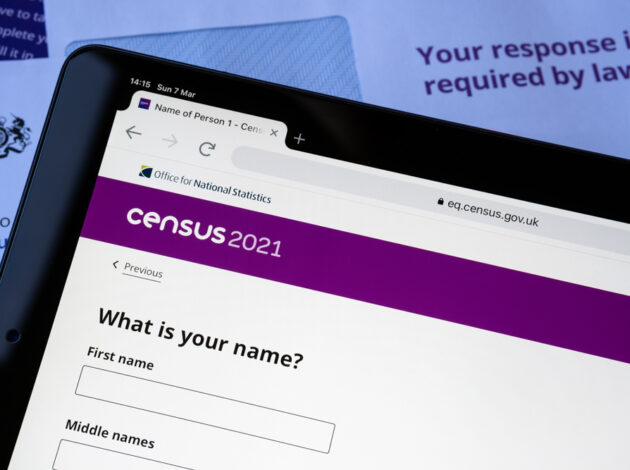
How do we find the best and most cost-effective ways to help people take part in the next census? We carry out a test. In March 2027, the Office for National Statistics (ONS) will run a large-scale census test across England and Wales to help prepare for Census 2031. As Mary Gregory explains, like a scientific experiment, the test will try different approaches in different places. By asking selected households and students to complete a questionnaire, we can learn what works best to encourage responses, what needs improving and which methods to rule out.
Next spring, we plan to invite 120,000 households in six local authorities and a further 100,000 households across England and Wales, to complete a test census questionnaire. Most will receive an invitation to respond online, with other ways to take part, including paper forms, available where needed.
We will not be producing any statistics from this test. Instead, we will use what we learn to help plan how we run Census 2031. This is part of a rigorous programme of research and testing over the coming years. No final decisions on the design of Census 2031 or the content of the census questionnaire have been made.
The test is voluntary, but we hope people will see the importance of taking part as the information the census ultimately delivers informs vital public services on which we all rely. It is used by central government, local authorities and charities to understand where things like roads, schools and healthcare services are needed.
Where we’re testing
Testing will focus on six local authorities: Breckland, Cardiff, Monmouthshire, Newcastle upon Tyne, North Norfolk and Westminster.
Together, these areas offer a mix of urban and rural communities, include some places where people are less likely to use digital services, as well as some Welsh-speaking areas and universities.
Alongside this, a further 100,000 households across England and Wales will be invited to take part to make sure the test reaches people with a wide range of circumstances to understand how we best help them to respond. This aspect of the test is also designed to support research for the new ethnicity question, which I’ll come onto later.
Alongside these households, all students living in halls of residence in Cardiff and Newcastle will be invited to take part. Reaching students in halls has long been a challenge for the census. In Census 2021, the pandemic disrupted plans for collecting responses, with many students not at a usual term-time address. It is therefore important we test different approaches, including new ways to engage students in halls of residence.
Finding out what works
As part of its recommendations for censuses worldwide for the 2030s, the United Nations says that, “by testing different approaches alongside each other a country can determine which are the most effective in a rehearsal or in the census itself”.
The census is a huge undertaking that must reach every household in England and Wales. This test is the first major operational practice before the real thing in 2031. We also plan to run a large-scale rehearsal in 2029.
The test is about learning how best to run a large data-collection operation in today’s (and tomorrow’s) world. We will explore different ways to encourage people to respond and test a simpler authentication process for online responses. For example, for the first time respondents can request an access code before receiving their invitation letter.
We’re also looking to ensure we make it as convenient as possible for people to take part and get the help they need easily. So, for those who need it, we’re trialling going out to people to help them complete their questionnaire on the doorstep. Other work will explore how we can make the census more efficient by using other information to identify vacant properties.
This means not everyone will have the same experience of the Census Test 2027. Those differences are an important part of the exercise: comparing the results will help us identify the most cost-effective approaches for Census 2031 and rule out those that work less well.
We’re also working closely with other census offices across the UK on a coherent approach to Census 2031, including running our 2027 tests in parallel. While questionnaires will be unique across the nations, in this test, for the first time, we’re using the same online infrastructure in England, Wales, Scotland and Northern Ireland. This demonstrates our intention to work together and learn from each other going forward.
The questionnaire
The test is very much an operational exercise, not for testing potential new topics. In December we will be publishing the conclusion of the consultation on which topics we should cover in 2031, and a thorough process of question research and testing follows.
Therefore, the census test questionnaire will mostly be the same as the Census 2021 questionnaire, with some subtle differences. For instance, we’re taking the opportunity to trial the developing Government Statistical Service ethnic group harmonised standard question design. The question is being developed to enable people to better reflect their ethnicity. It remains under development and is subject to further testing. For Census Test 2027 it won’t include any of the new response options being considered following the public consultation on user needs for additional response options in a future ethnicity standard. The new question design has specifically been included in the test to provide important evidence about how the design works at scale and its implications for respondents, data collection, processing and statistical outputs.
As we move to a different question, changes to the question design, response options and ordering may affect comparability over time, particularly for more detailed ethnicity outputs. The interim update on the ethnicity harmonised standard summarises the changes to the developing question design and the evidence underpinning them, and outlines the next steps for further research as the standard develops.
The test will not include a question on gender identity. Work on a new gender identity harmonised standard is ongoing and won’t be ready in time for Census Test 2027. We recognise the importance of comprehensively testing how we collect data on gender identity, and a bespoke programme of research and testing is being undertaken.
We’re also considering the requirements for the sex question in Census 2031 to determine which definition and question in the new harmonised standard would be most appropriate. Therefore, for Census Test 2027, we will be asking the sex question used in Census 2021. This should not be taken as an indication of our approach for Census 2031.
Every response to Census Test 2027 will help us learn what works and what needs to improve. If you’re invited to take part in March 2027, you’ll have a chance to help shape how Census 2031 is run.
Census 2031 will affect us all. Running this test will help ensure it goes smoothly. Keep up to date as we progress our plans for the next census here.


Mary Gregory – Executive Director for population statistics and census