Keeping pace with a changing population: our plan for improving statistics

Every ten years, a census provides a uniquely detailed snapshot of the population. But users need to know what the population looks like, and how it’s changing, more frequently than that. The Office for National Statistics does this by using the power of surveys and data collected from across government. Taken together, these form a system that can be used to produce our statistics, where improvements in one area strengthen others.  As we launch the Population Statistics System Plan for 2027-29, Mary Gregory explains how a system-wide approach improves quality, builds confidence and delivers better value in our statistics.

Read more on Keeping pace with a changing population: our plan for improving statistics

A chance to shape Census 2031

How do we find the best and most cost-effective ways to help people take part in the next census? We carry out a test.
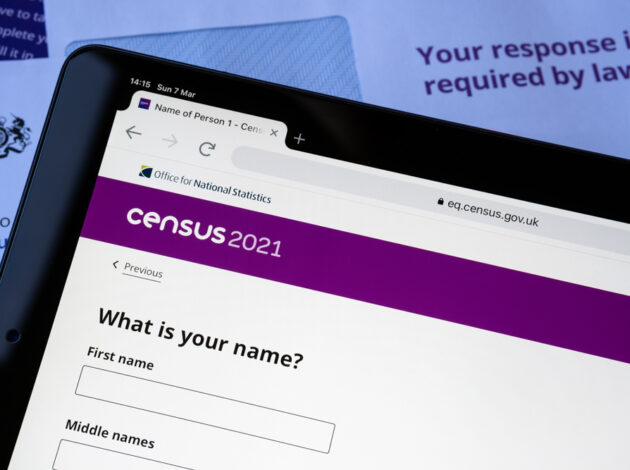
In March 2027, the Office for National Statistics (ONS) will run a large-scale census test across England and Wales to help prepare for Census 2031. As Mary Gregory explains, like a scientific experiment, the test will try different approaches in different places. By asking selected households and students to complete a questionnaire, we can learn what works best to encourage responses, what needs improving and which methods to rule out.

Read more on A chance to shape Census 2031

Listening, learning and looking to the future

André Loranger is the UK's National Statistician.

In his first week as the UK’s National Statistician, André Loranger reflects on what he has learned from a career in official statistics, the values shared by the UK and Canadian statistical systems and why listening to colleagues and users will be central to shaping delivery of his priorities.

Read more on Listening, learning and looking to the future