
Putting the foundations in place to make Census 2031 a success
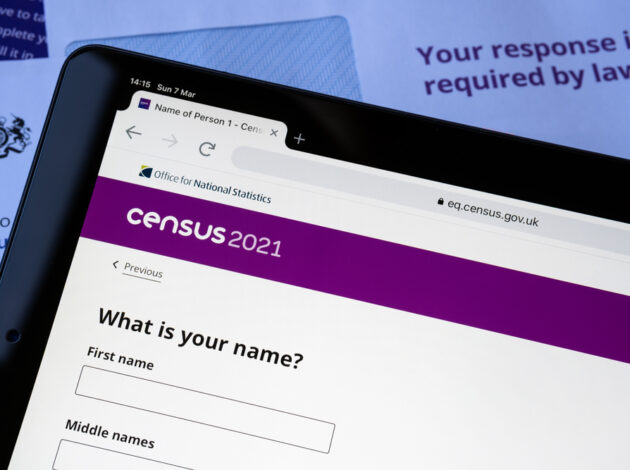
The start of a census programme is an exciting moment. Decisions made now will prepare Census 2031 for success and ultimately provide those high-quality census statistics that will underpin the statistical system for years to come. To mark the launch of the Census 2031 strategy, Mary Gregory provides an update on the topic consultation, looks ahead to the operational test next year and explains how the ONS will publish its annual population estimates.
The census of population and housing is unique within the statistical system. It has been at the heart of population statistics for England and Wales for over two centuries. Following user feedback, we decided a census was still needed. The statistics it produces are widely used by central and local government, charities and businesses, and by the public. Census outputs underpin so much of the statistical system, including as a vital contributor to economic statistics.
The census is also unique in its part in public life: it reaches out to the whole of the UK [the Office for National Statistics (ONS) runs the census in England and Wales, while National Records of Scotland and Northern Ireland Statistics and Research Agency run their own censuses, respectively] and the whole population is included in the statistics, down to small communities and areas.
Consulting on topics
First and foremost, we aim to make the census reflect modern society. For instance, the 1951 Census offered a glimpse of the nation in the post-war period, asking households about amenities like cooking facilities and indoor toilets. More recently, questions have been introduced on ethnicity and religion to reflect our diverse society.
As our blog last year explained, “the information gathered about all our lives isn’t captured in any other way and it creates an indelible record for future generations”. We’ve recently closed our census topic consultation. We’ve had a really good response from across the public and private sector, from individuals to charities, councils to other government departments. Your responses provide crucial evidence to support decisions about which topics should be included in the census. Of course, engagement doesn’t stop there, and there will be many more moments where we will be actively seeking feedback as our planning for Census 2031 ramps up.
We now begin the process of reviewing the consultation responses and prioritising the information we want to collect that will provide the greatest insight and value for society. This will take into account practical considerations such as the length of the questionnaire and respondent experience – ensuring it’s designed to be inclusive and accessible.
It is vital we ensure the topics we include are justified, evidence-based, and that the burden on respondents is proportionate. We have published further details of the criteria set out in the consultation document, which will shape our assessment of the information we’ve received.
We aim to publish an initial response to the consultation later this spring, followed by a full response later this year before we begin question development.
The census strategy
Delivering the census relies on the involvement of a huge range of partners, from commercial suppliers – who deliver vital components of the process – to local government and the community groups who help us to reach every community and place in England and Wales.
Making the census a success is about how we work as well as what we do. Today we’ve launched our strategy for Census 2031 in England and Wales which reflects just that.
Building on our success and experiences from 2021 and census experiences around the world, we must design a census that will work for the 2030s. We will also use the knowledge we have built from other non-survey sources to help us meet challenges, and opportunities, in society and technology.
The strategy provides a clear picture of the purpose and scope of the census. Alongside forthcoming publications including our design for Census 2031, it will inform stakeholders and partners, and aid scrutiny and assurance.
It outlines our priorities and objectives. Trustworthiness, value, inclusion and collaboration are central to how we will deliver the census, so that we can produce high-quality outputs that meet user needs.
We must ensure everyone can take part and we must work closely with the devolved nations to produce coherent UK statistics. Our strategy also explains that Census 2031 must be delivered on time, provide value for money and leave a lasting legacy.
The strategy’s comprehensive approach will help those we engage with to understand what we are doing and how that work supports the delivery of a successful census.
Operational planning for Census 2031
In spring 2027, the ONS is planning to hold a large-scale voluntary test in England and Wales in preparation for the next census. It will give us a chance to test systems and services, and new design approaches.
The test will go out to a sample of 120,000 households across Breckland, Cardiff, Monmouthshire, Newcastle, North Norfolk and Westminster.
These locations cover urban and rural locations, and include student, digitally excluded and older populations. We are also inviting a further 100,000 households from across England and Wales to take part.
You can keep updated on our plans for the 2027 Test here.
Population statistics
In light of the decision to hold a census in 2031, we have reviewed our work on how we produce our regular population estimates. For the past few years, we’ve been working to build a system using more administrative data (such as health, tax and education records) that wouldn’t be reliant on a decennial census as the foundation.
However, the assessment of our progress on Admin Based Population Estimates (ABPEs) with reference to the acceptance criteria for making them official estimates shows that we are not ready to adopt wholesale methodological changes.
The need to ensure that population estimates can be produced reliably and consistently means we will continue to produce ‘traditional’ mid-year estimates using established methods.
They are traditional in the sense they will use census data as the benchmark, updated each year using births and deaths registration data, as well as migration data (internal and international). But they are not static in their methods: the data that goes into what is known as the cohort component method are admin based. Our international migration statistics now fully utilise the power of admin data, while our internal migration flows are based on GP registrations, among other things.
We have learnt a lot from our experimental ABPE approach over the past few years and will be taking lessons from that and incorporating them into our mid-year estimates, as explained in our quarterly update.
Our approach will now shift to one of continuous improvement, whereby we will continue to make iterative improvements to the data and methods which underpin the components of population change. We will also conduct research to determine the extent to which increasing use of model-based approaches and admin data will offer the most robust method for estimating the population in the future.
Taken together, these plans will help us achieve our overarching aim of providing statistics that underpin the UK’s most critical decisions and inform the public. As ever, if you have any feedback on what has been set out in today’s blog, email pop.info@ons.gov.uk.

Mary Gregory – Executive Director for population statistics and census